Buy myreport.eu ?
We are moving the project
myreport.eu .
Are you interested in purchasing the domain
myreport.eu ?
domain@kv-gmbh.de · 0541-91531010
Buy myreport.eu ?
'How many diagonals does this have?'
A polygon with 10 sides has 35 diagonals. This can be calculated using the formula n(n-3)/2, where n is the number of sides. So for a 10-sided polygon, the calculation would be 10(10-3)/2 = 35 diagonals. **
How long are the space diagonals?
The space diagonals of a cube are equal to the length of the cube's side multiplied by the square root of 3. Therefore, the length of the space diagonals can be expressed as s√3, where s is the length of the cube's side. This means that the space diagonals are always longer than the length of any individual face diagonal. **


Similar search terms for Diagonals
Top-Angebote
Products related to Diagonals:
-
Board and Dice Nucleum Energy Research Institute Board Game - Strategic Economic Board Game with Energy Networks and Research DevelopmentBuild an industrial empire in an alternate twentieth century transformed by the Uranium Revolution. Compete to develop powerful energy networks, attract investment, and earn the support of influential patrons. Plan routes, expand research, and connect cities as you develop increasingly ambitious technologies. Every decision affects progress, from constructing facilities to pursuing contracts and partnerships. Resource management and long-term planning are essential to succeed.23,20 £*Shipping: 3,95 £Secure redirect to the provider
-
United Charger & Smartwatch Data Cable Replacement Charger & Smartwatch Data Cable ReplacementKeep your Garmin 920XT charger ready whenever adventure calls. Designed for athletes, runners, and fitness enthusiasts, this replacement charger ensures your Forerunner 920XT stays powered and connected. Its durable smartwatch charging cable offers...39,97 $*Shipping: 0,00 $Secure redirect to the provider
-
SAGE Publications Case Study Research and Applications: Design and MethodsRecognized as one of the most cited methodology books in the social sciences, the Sixth Edition of Robert K. Yin′s bestselling text provides a complete portal to the world of case study research. With the integration of 11 applications in this edition, the book gives readers access to exemplary case studies drawn from a wide variety of academic and applied fields. Ultimately, Case Study Research and Applications will guide students in the successful use and application of the case study research method.59,99 £*Shipping: 0,00 £Secure redirect to the provider




-
What are the diagonals in a parallelogram?
The diagonals in a parallelogram are the line segments that connect opposite vertices of the parallelogram. This means that the diagonals of a parallelogram are the line segments that connect the opposite corners of the shape. The diagonals of a parallelogram bisect each other, meaning they intersect at their midpoints. Additionally, the diagonals of a parallelogram divide the shape into four congruent triangles. **
-
How can one determine the space diagonals?
To determine the space diagonals of a three-dimensional shape, one can use the Pythagorean theorem. For a rectangular prism, the space diagonal can be found by using the formula √(l^2 + w^2 + h^2), where l, w, and h are the length, width, and height of the prism, respectively. For a cube, the space diagonal can be found by multiplying the length of one side by √3. For other shapes, one can use the distance formula to find the distance between two opposite vertices to determine the space diagonal. **
-
How long are the diagonals in these rhombuses?
The diagonals in a rhombus are equal in length and bisect each other at right angles. Therefore, the length of the diagonals in these rhombuses can be calculated using the Pythagorean theorem. If the side length of the rhombus is given as 's', then the length of the diagonals can be calculated as √(s^2 + s^2) = √2s. So, the length of the diagonals in these rhombuses is √2 times the side length. **
-
How can one mathematically demonstrate the space diagonals?
To mathematically demonstrate the space diagonals of a cube, one can use the Pythagorean theorem. The space diagonal of a cube connects two opposite corners of the cube. By considering the three-dimensional coordinates of the two corners, one can calculate the distance between them using the distance formula derived from the Pythagorean theorem. This distance represents the length of the space diagonal of the cube. **

How many space diagonals does an octahedron have?
An octahedron has a total of 6 space diagonals. These diagonals connect opposite vertices of the octahedron, creating lines that pass through the center of the shape. Each of the 6 vertices of the octahedron can be connected to 4 other vertices, resulting in a total of 12 edges, but only 6 of these edges are space diagonals. **
What does it mean when the diagonals are bisected?
When the diagonals of a polygon are bisected, it means that each diagonal is divided into two equal parts. This creates four line segments that meet at the center of the polygon. The point where the diagonals intersect is known as the centroid, and it is the center of balance for the polygon. Bisecting the diagonals is a property of certain types of polygons, such as parallelograms and rectangles. **
Top-Angebote
Products related to Diagonals:
-
William Collins Beautiful News: Positive Trends, Uplifting Stats, Creative Solutions by David McCandlessIn this fascinating follow-up to the bestselling Information is Beautiful and Knowledge is Beautiful, the king of infographics David McCandless uses spectacular visuals to give us all a bit of good news. We are living in the Information Age, in which we are constantly bombarded with data – on television, in print and online. How can we relate to this mind-numbing overload? Enter David McCandless and his amazing infographics: simple, elegant ways to understand information too complex or abstract to grasp any way but visually. In his unique signature style, he creates dazzling displays that blend facts with their connections, contexts and relationships, making information meaningful, entertaining – and beautiful. In his highly anticipated third book, McCandless illustrates positive news from around the world, for an informative, engaging and uplifting collection of new infographic art.5,99 £*Shipping: 2,99 £Secure redirect to the provider
-
Educational Insights Boxineers Cardboard Vehicles Craft Kit - 84 Pieces for Kids - Educational InsightsTransform an ordinary cardboard box into a unique vehicle with the Boxineers Cardboard Vehicles Craft Kit. This kit includes 84 pieces, allowing children to create monster trucks, airplanes, rocket ships, recycling trucks, and many other imaginative creations. The reusable construction set features a child-friendly screwdriver and hole punch, making it easy for kids to attach the supplied parts without cutting the cardboard. Add wheels, wings, steering wheels, control panels, windows, flames, and other colorful accessories to customize each vehicle. The kit contains 30 bolts, six brackets, 40 reusable vehicle accessories, and six sticker sheets. Boxineers combines hands-on making with open-ended pretend play, encouraging children to experiment with how parts connect and solve simple construction problems.17,69 £*Shipping: 3,95 £Secure redirect to the provider
-
Board and Dice Nucleum Energy Research Institute Board Game - Strategic Economic Board Game with Energy Networks and Research DevelopmentBuild an industrial empire in an alternate twentieth century transformed by the Uranium Revolution. Compete to develop powerful energy networks, attract investment, and earn the support of influential patrons. Plan routes, expand research, and connect cities as you develop increasingly ambitious technologies. Every decision affects progress, from constructing facilities to pursuing contracts and partnerships. Resource management and long-term planning are essential to succeed.23,20 £*Shipping: 3,95 £Secure redirect to the provider
-
'How many diagonals does this have?'
A polygon with 10 sides has 35 diagonals. This can be calculated using the formula n(n-3)/2, where n is the number of sides. So for a 10-sided polygon, the calculation would be 10(10-3)/2 = 35 diagonals. **
-
How long are the space diagonals?
The space diagonals of a cube are equal to the length of the cube's side multiplied by the square root of 3. Therefore, the length of the space diagonals can be expressed as s√3, where s is the length of the cube's side. This means that the space diagonals are always longer than the length of any individual face diagonal. **
-
What are the diagonals in a parallelogram?
The diagonals in a parallelogram are the line segments that connect opposite vertices of the parallelogram. This means that the diagonals of a parallelogram are the line segments that connect the opposite corners of the shape. The diagonals of a parallelogram bisect each other, meaning they intersect at their midpoints. Additionally, the diagonals of a parallelogram divide the shape into four congruent triangles. **
-
How can one determine the space diagonals?
To determine the space diagonals of a three-dimensional shape, one can use the Pythagorean theorem. For a rectangular prism, the space diagonal can be found by using the formula √(l^2 + w^2 + h^2), where l, w, and h are the length, width, and height of the prism, respectively. For a cube, the space diagonal can be found by multiplying the length of one side by √3. For other shapes, one can use the distance formula to find the distance between two opposite vertices to determine the space diagonal. **
Similar search terms for Diagonals
-
United Charger & Smartwatch Data Cable Replacement Charger & Smartwatch Data Cable ReplacementKeep your Garmin 920XT charger ready whenever adventure calls. Designed for athletes, runners, and fitness enthusiasts, this replacement charger ensures your Forerunner 920XT stays powered and connected. Its durable smartwatch charging cable offers...39,97 $*Shipping: 0,00 $Secure redirect to the provider
-
SAGE Publications Case Study Research and Applications: Design and MethodsRecognized as one of the most cited methodology books in the social sciences, the Sixth Edition of Robert K. Yin′s bestselling text provides a complete portal to the world of case study research. With the integration of 11 applications in this edition, the book gives readers access to exemplary case studies drawn from a wide variety of academic and applied fields. Ultimately, Case Study Research and Applications will guide students in the successful use and application of the case study research method.59,99 £*Shipping: 0,00 £Secure redirect to the provider
-
Educational Insights Tiltonic Marble Maze Brainteaser - 7+ - Adjustable Track PuzzleChallenge your problem-solving skills with the Educational Insights Tiltonic Marble Maze Brainteaser. This two-stage puzzle combines maze-building with hands-on marble play, creating a fun challenge for children aged 7 and up. Start by studying one of the included challenge puzzles and arranging the adjustable track pieces on the turquoise game board to create the correct route. Once the maze is ready, tilt the board carefully to guide the four colorful marbles through the track and into their matching destinations. Each challenge encourages players to think ahead, test ideas, and refine their solution. With 50 puzzle challenges, 25 adjustable track pieces, and four marbles, Tiltonic offers plenty of replay value. Children can also design their own marble mazes once they have mastered the included puzzles. The tactile format makes it an engaging alternative to screen-based entertainment while encouraging creativity, logic, critical thinking, and hand-eye coordination.13,89 £*Shipping: 3,95 £Secure redirect to the provider
-
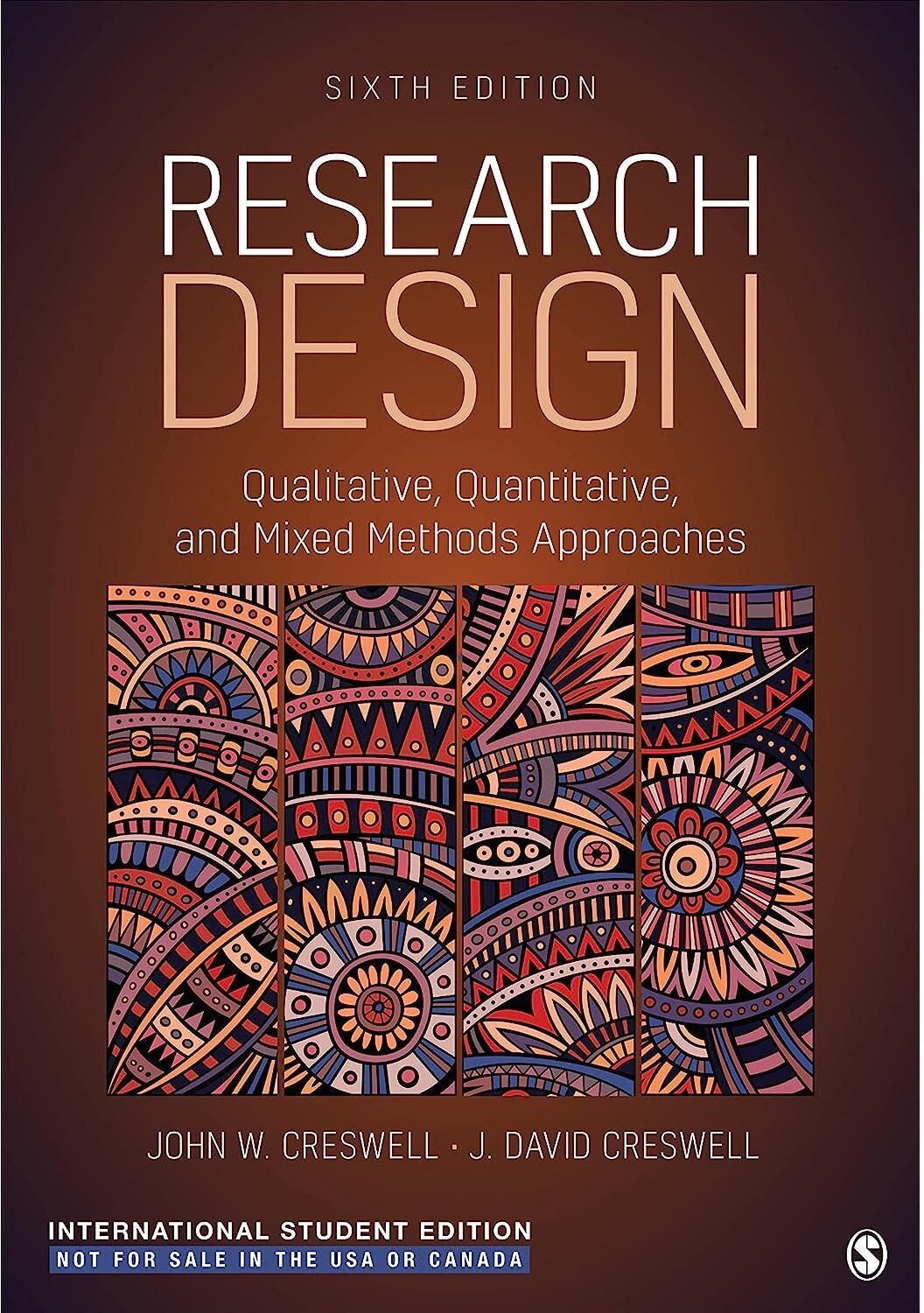
SAGE Publications Research Design - International Student Edition: Qualitative, Quantitative, and Mixed Methods ApproachesThe new edition of the best-selling text, Research Design: Qualitative, Quantitative, and Mixed Methods Approaches, continues the pioneering tradition of providing clear and concise instruction for understanding research and developing proposals for all three approaches. John W. Creswell and co-author J. David Creswell include a preliminary consideration of philosophical assumptions, a review of the literature, an assessment of the use of theory in research approaches, and reflections about the importance of writing and ethics in scholarly inquiry in a way that is applicable to all types of research. Key elements of the research process, giving specific attention to each approach. The book has been lauded for its language and tone, which are both accessible and inviting. It is a text that students keep and continue to use as a resource throughout their studies, once the specific class is over. The Sixth Edition includes more coverage of community-based participatory research, comparisons of qualitative and quantitative research, an expanded glossary with basic terms, updated examples of social, behavioural, and health research, new coverage of ethical requirements, updated APA 7th edition coverage, and additional exercises aimed at research projects.59,95 £*Shipping: 0,00 £Secure redirect to the provider
-
How long are the diagonals in these rhombuses?
The diagonals in a rhombus are equal in length and bisect each other at right angles. Therefore, the length of the diagonals in these rhombuses can be calculated using the Pythagorean theorem. If the side length of the rhombus is given as 's', then the length of the diagonals can be calculated as √(s^2 + s^2) = √2s. So, the length of the diagonals in these rhombuses is √2 times the side length. **
-
How can one mathematically demonstrate the space diagonals?
To mathematically demonstrate the space diagonals of a cube, one can use the Pythagorean theorem. The space diagonal of a cube connects two opposite corners of the cube. By considering the three-dimensional coordinates of the two corners, one can calculate the distance between them using the distance formula derived from the Pythagorean theorem. This distance represents the length of the space diagonal of the cube. **
-
How many space diagonals does an octahedron have?
An octahedron has a total of 6 space diagonals. These diagonals connect opposite vertices of the octahedron, creating lines that pass through the center of the shape. Each of the 6 vertices of the octahedron can be connected to 4 other vertices, resulting in a total of 12 edges, but only 6 of these edges are space diagonals. **
-
What does it mean when the diagonals are bisected?
When the diagonals of a polygon are bisected, it means that each diagonal is divided into two equal parts. This creates four line segments that meet at the center of the polygon. The point where the diagonals intersect is known as the centroid, and it is the center of balance for the polygon. Bisecting the diagonals is a property of certain types of polygons, such as parallelograms and rectangles. **
* All prices are inclusive of VAT and, if applicable, plus shipping costs. The offer information is based on the details provided by the respective shop and is updated through automated processes. Real-time updates do not occur, so deviations can occur in individual cases. ** Note: Parts of this content were created by AI.