Buy myreport.eu ?
We are moving the project
myreport.eu .
Are you interested in purchasing the domain
myreport.eu ?
domain@kv-gmbh.de · 0541-91531010
Buy myreport.eu ?
How are hybrid orbitals and molecular orbitals related?
Hybrid orbitals and molecular orbitals are related in that hybrid orbitals are a combination of atomic orbitals that form when atoms bond to create a molecule. These hybrid orbitals then overlap with each other and with other atomic orbitals to form molecular orbitals, which describe the distribution of electrons in a molecule. In other words, hybrid orbitals are the building blocks that contribute to the formation of molecular orbitals, which ultimately determine the bonding and structure of a molecule. **
What are antibonding orbitals?
Antibonding orbitals are molecular orbitals that have higher energy than the corresponding bonding orbitals. They result from the destructive interference of atomic orbitals when they combine to form a molecule. Electrons in antibonding orbitals destabilize the molecule and weaken the bond strength between the atoms. Antibonding orbitals are denoted with an asterisk (*) symbol, such as σ* or π*. **
Similar search terms for Orbitals
Top-Angebote
Products related to Orbitals:
-
Board and Dice Nucleum Energy Research Institute Board Game - Strategic Economic Board Game with Energy Networks and Research DevelopmentBuild an industrial empire in an alternate twentieth century transformed by the Uranium Revolution. Compete to develop powerful energy networks, attract investment, and earn the support of influential patrons. Plan routes, expand research, and connect cities as you develop increasingly ambitious technologies. Every decision affects progress, from constructing facilities to pursuing contracts and partnerships. Resource management and long-term planning are essential to succeed.23,20 £*Shipping: 3,95 £Secure redirect to the provider
-
United Charger & Smartwatch Data Cable Replacement Charger & Smartwatch Data Cable ReplacementKeep your Garmin 920XT charger ready whenever adventure calls. Designed for athletes, runners, and fitness enthusiasts, this replacement charger ensures your Forerunner 920XT stays powered and connected. Its durable smartwatch charging cable offers...39,97 $*Shipping: 0,00 $Secure redirect to the provider
-
SAGE Publications Case Study Research and Applications: Design and MethodsRecognized as one of the most cited methodology books in the social sciences, the Sixth Edition of Robert K. Yin′s bestselling text provides a complete portal to the world of case study research. With the integration of 11 applications in this edition, the book gives readers access to exemplary case studies drawn from a wide variety of academic and applied fields. Ultimately, Case Study Research and Applications will guide students in the successful use and application of the case study research method.59,99 £*Shipping: 0,00 £Secure redirect to the provider




-
What are orbitals 2?
Orbitals are regions in an atom where electrons are likely to be found. Orbitals are described by quantum mechanics and have specific shapes and orientations. Orbitals are labeled by their energy level (n) and sublevel (s, p, d, f), and each sublevel contains a specific number of orbitals with different shapes. For example, the second energy level (n=2) contains an s orbital and three p orbitals, each with a different orientation in space. **
-
What are molecular orbitals?
Molecular orbitals are regions of space around a molecule where the probability of finding an electron is high. They are formed by the combination of atomic orbitals from the individual atoms in the molecule. Molecular orbitals can be bonding, anti-bonding, or non-bonding, and they play a crucial role in determining the electronic structure and properties of molecules. The interaction of these molecular orbitals determines the stability and reactivity of the molecule. **
-
Can you sketch atomic orbitals?
As a language model AI, I cannot physically sketch atomic orbitals. However, I can describe them. Atomic orbitals are regions of space around the nucleus of an atom where an electron is likely to be found. They are represented as three-dimensional shapes, such as spheres, dumbbells, and other more complex shapes, which correspond to the probability of finding an electron at a particular location within the orbital. These shapes are determined by the quantum numbers that describe the energy, shape, and orientation of the orbitals. **
-
Why does the building principle require more energy for 3d orbitals than for 4s orbitals?
The building principle requires more energy for 3d orbitals than for 4s orbitals because the 3d orbitals have a higher energy level than the 4s orbitals. This is due to the different shapes and orientations of the orbitals. The 3d orbitals have more complex shapes and orientations, which require more energy to fill and stabilize. Additionally, the 4s orbital is closer to the nucleus, which results in a lower energy level compared to the 3d orbitals. **

How do I recognize the orbitals?
Orbitals can be recognized by their shape and orientation in space. There are different types of orbitals, such as s, p, d, and f orbitals, each with a distinct shape. For example, s orbitals are spherical, p orbitals are dumbbell-shaped, and d orbitals have more complex shapes. Additionally, orbitals are often represented graphically in diagrams or models to help visualize their structure. **
How do I start learning orbitals?
To start learning about orbitals, it is important to have a basic understanding of atomic structure and quantum mechanics. You can begin by studying the different types of orbitals (s, p, d, f) and their shapes, as well as their energy levels and electron configurations. There are many resources available online, such as textbooks, videos, and online courses, that can help you learn about orbitals in more detail. It is also helpful to practice solving problems and working through examples to solidify your understanding of orbitals. **
Top-Angebote
Products related to Orbitals:
-
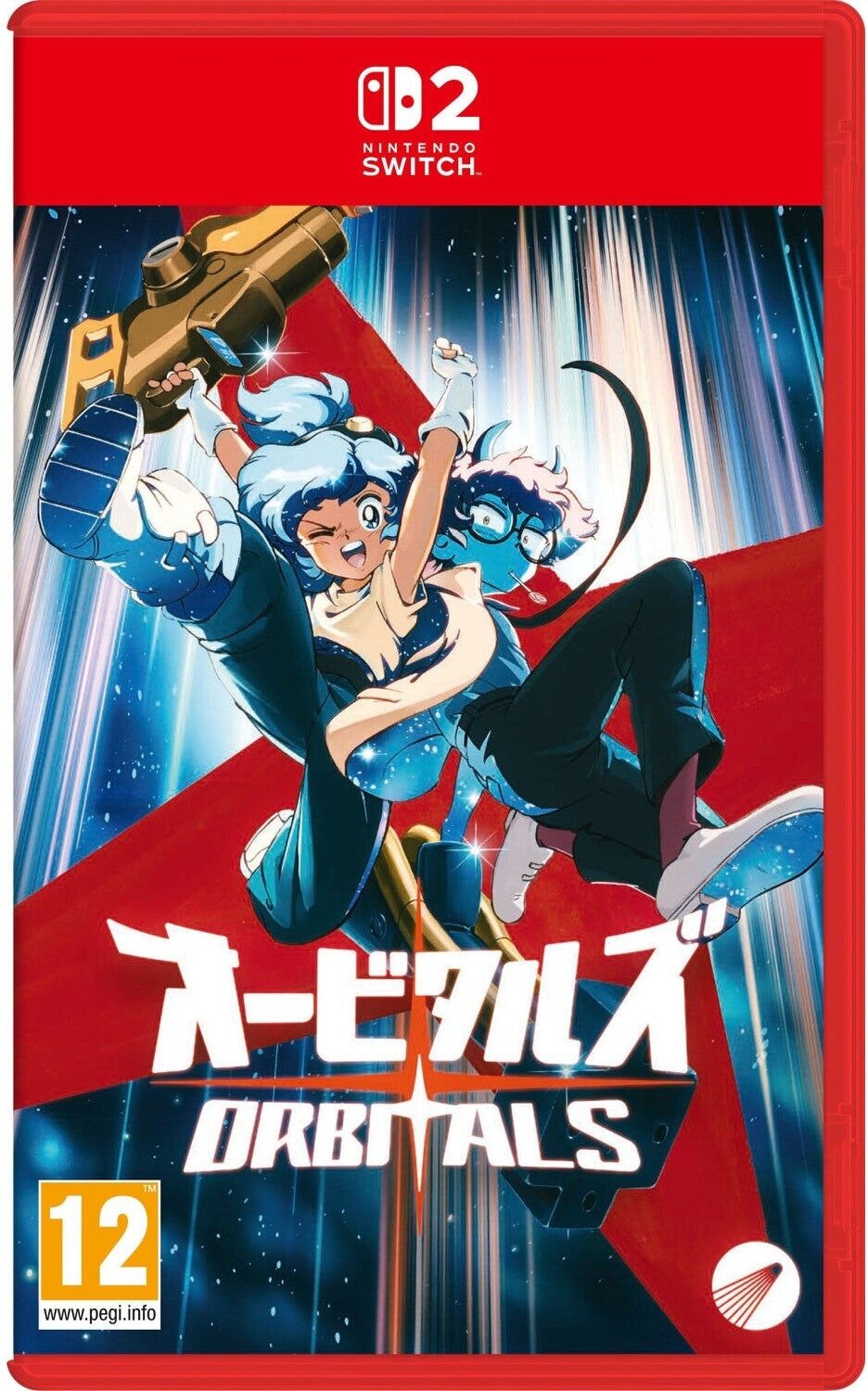
Kepler Interactive Orbitals for Nintendo Switch 2 - Two-Player Cooperative Game - Ages 7+Explore the stars together in Orbitals. Join Maki and Omura in a colourful intergalactic adventure designed for two-player cooperation. Their space-station home is trapped within a supernatural cosmic storm, and the pair must journey beyond the Storm Wall to find the help needed to save it. Teamwork is essential in Orbitals, which combines asymmetric puzzles, exploration, and action, giving each player distinct tools and responsibilities. Work together to open routes, overcome hazards, and navigate mysterious abandoned stations. The game features a retro anime presentation with cinematic sequences produced by Studio Massket, and a voiced story with English and Japanese voice acting. Play locally using split-screen or team up online through supported Nintendo Switch features. Orbitals is supplied on a Nintendo Switch game cartridge.39,29 £*Shipping: 3,95 £Secure redirect to the provider
-
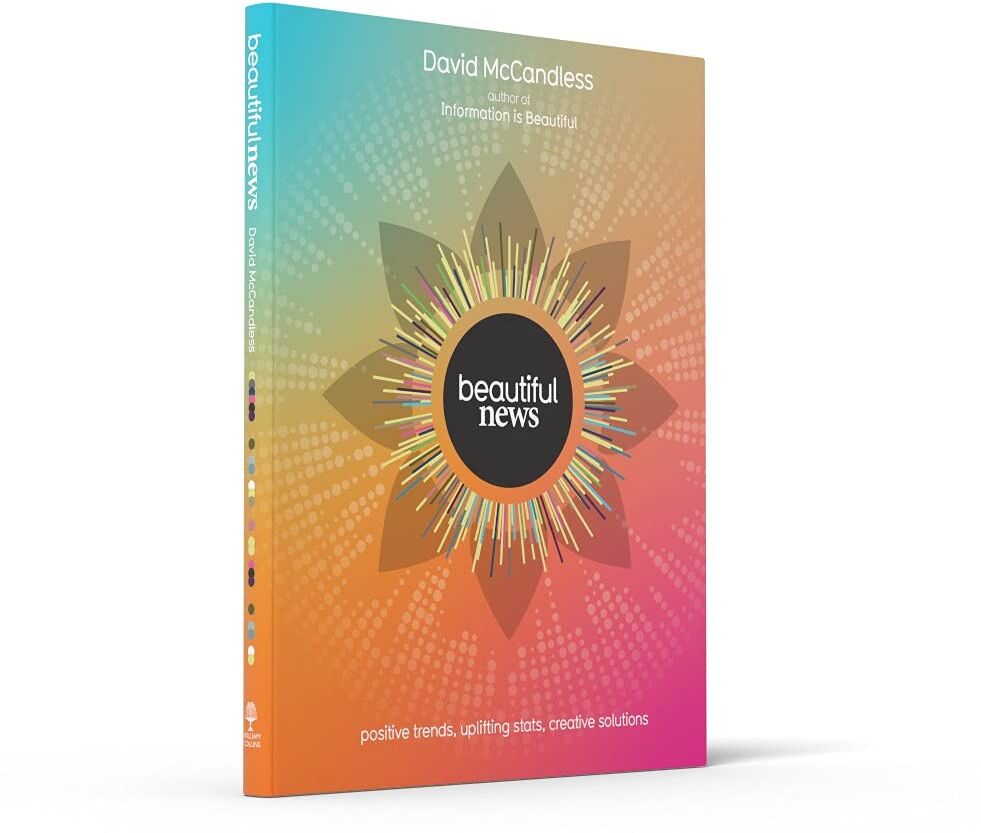
William Collins Beautiful News: Positive Trends, Uplifting Stats, Creative Solutions by David McCandlessIn this fascinating follow-up to the bestselling Information is Beautiful and Knowledge is Beautiful, the king of infographics David McCandless uses spectacular visuals to give us all a bit of good news. We are living in the Information Age, in which we are constantly bombarded with data – on television, in print and online. How can we relate to this mind-numbing overload? Enter David McCandless and his amazing infographics: simple, elegant ways to understand information too complex or abstract to grasp any way but visually. In his unique signature style, he creates dazzling displays that blend facts with their connections, contexts and relationships, making information meaningful, entertaining – and beautiful. In his highly anticipated third book, McCandless illustrates positive news from around the world, for an informative, engaging and uplifting collection of new infographic art.5,99 £*Shipping: 2,99 £Secure redirect to the provider
-
Board and Dice Nucleum Energy Research Institute Board Game - Strategic Economic Board Game with Energy Networks and Research DevelopmentBuild an industrial empire in an alternate twentieth century transformed by the Uranium Revolution. Compete to develop powerful energy networks, attract investment, and earn the support of influential patrons. Plan routes, expand research, and connect cities as you develop increasingly ambitious technologies. Every decision affects progress, from constructing facilities to pursuing contracts and partnerships. Resource management and long-term planning are essential to succeed.23,20 £*Shipping: 3,95 £Secure redirect to the provider
-
How are hybrid orbitals and molecular orbitals related?
Hybrid orbitals and molecular orbitals are related in that hybrid orbitals are a combination of atomic orbitals that form when atoms bond to create a molecule. These hybrid orbitals then overlap with each other and with other atomic orbitals to form molecular orbitals, which describe the distribution of electrons in a molecule. In other words, hybrid orbitals are the building blocks that contribute to the formation of molecular orbitals, which ultimately determine the bonding and structure of a molecule. **
-
What are antibonding orbitals?
Antibonding orbitals are molecular orbitals that have higher energy than the corresponding bonding orbitals. They result from the destructive interference of atomic orbitals when they combine to form a molecule. Electrons in antibonding orbitals destabilize the molecule and weaken the bond strength between the atoms. Antibonding orbitals are denoted with an asterisk (*) symbol, such as σ* or π*. **
-
What are orbitals 2?
Orbitals are regions in an atom where electrons are likely to be found. Orbitals are described by quantum mechanics and have specific shapes and orientations. Orbitals are labeled by their energy level (n) and sublevel (s, p, d, f), and each sublevel contains a specific number of orbitals with different shapes. For example, the second energy level (n=2) contains an s orbital and three p orbitals, each with a different orientation in space. **
-
What are molecular orbitals?
Molecular orbitals are regions of space around a molecule where the probability of finding an electron is high. They are formed by the combination of atomic orbitals from the individual atoms in the molecule. Molecular orbitals can be bonding, anti-bonding, or non-bonding, and they play a crucial role in determining the electronic structure and properties of molecules. The interaction of these molecular orbitals determines the stability and reactivity of the molecule. **
Similar search terms for Orbitals
-
United Charger & Smartwatch Data Cable Replacement Charger & Smartwatch Data Cable ReplacementKeep your Garmin 920XT charger ready whenever adventure calls. Designed for athletes, runners, and fitness enthusiasts, this replacement charger ensures your Forerunner 920XT stays powered and connected. Its durable smartwatch charging cable offers...39,97 $*Shipping: 0,00 $Secure redirect to the provider
-
SAGE Publications Case Study Research and Applications: Design and MethodsRecognized as one of the most cited methodology books in the social sciences, the Sixth Edition of Robert K. Yin′s bestselling text provides a complete portal to the world of case study research. With the integration of 11 applications in this edition, the book gives readers access to exemplary case studies drawn from a wide variety of academic and applied fields. Ultimately, Case Study Research and Applications will guide students in the successful use and application of the case study research method.59,99 £*Shipping: 0,00 £Secure redirect to the provider
-
EaseUS Data Recovery Wizard 18 ProEaseUS Partition Master 18.0 Professional is a powerful and versatile tool for partition management on Windows systems. Designed for home and professional users, this software offers a range of advanced features to optimise hard disk usage and improve system performance. Key Features Complete Partition Management: Create, resize, move, merge, delete and hide partitions with ease. EaseUS Partition Master allows you to manage partitions without data loss, ensuring a smooth and secure experience. Disk Cloning: Clone entire disks or individual partitions to easily transfer data from one drive to another. This function is especially useful when upgrading to new hard disks or SSDs. Partition Recovery: Recovers partitions lost or damaged as a result of accidental deletions, Windows upgrades or virus attacks. The recovery function is quick and easy, allowing data to be restored in just a few clicks. Performance Optimisation: Supports 4K alignment of SSD partitions to improve read and write performance, ensuring your system performs at its best. Advanced Conversion: Convert disks and partitions between MBR and GPT without formatting, making it easy to upgrade to Windows 11 and manage large disks. File System Check and Repair: Quickly checks the file system for errors and bad sectors, restoring disk functionality efficiently. Bootable Media Creation: Create WinPE bootable media to solve system boot problems or perform partition management tasks without booting Windows. Intuitive Interface: The user interface is designed to be simple and intuitive, making access to all features easy even for novice users. Why Choose EaseUS Partition Master 18.0 Professional? EaseUS Partition Master 18.0 Professional stands out for its combination of advanced functionality and ease of use. It is an ideal solution for anyone who wants to manage their disks effectively, whether they are home users or IT professionals. Competitively priced and with free updates for life, it is an excellent investment for optimising data management. Choose EaseUS Partition Master 18.0 Professional for stress-free partition management and to ensure that your system is always running at peak capacity. Don't let disk management become a hassle; trust EaseUS for a complete and reliable solution.55,90 £*Shipping: 0,00 £Secure redirect to the provider
-
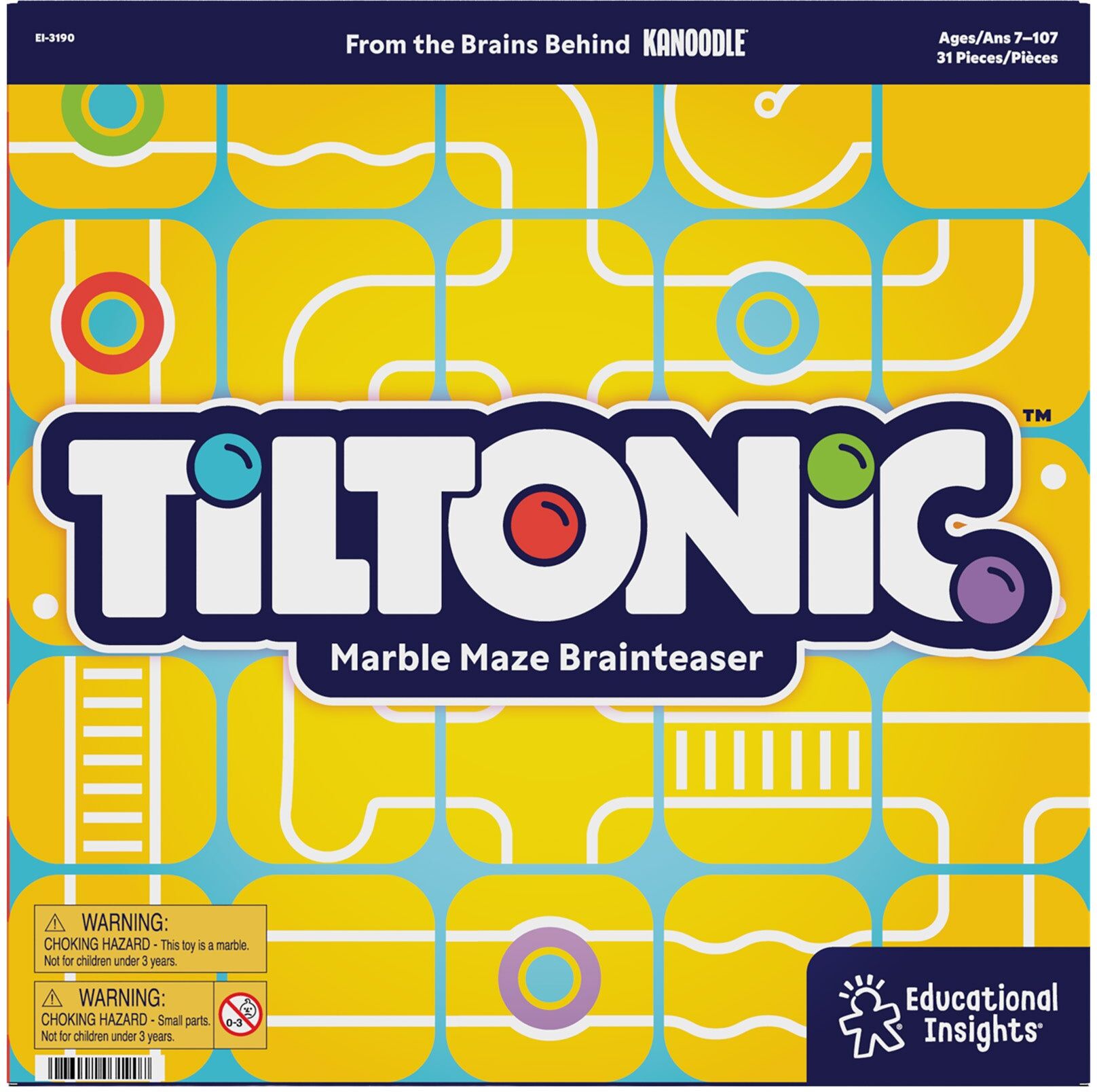
Educational Insights Tiltonic Marble Maze Brainteaser - 7+ - Adjustable Track PuzzleChallenge your problem-solving skills with the Educational Insights Tiltonic Marble Maze Brainteaser. This two-stage puzzle combines maze-building with hands-on marble play, creating a fun challenge for children aged 7 and up. Start by studying one of the included challenge puzzles and arranging the adjustable track pieces on the turquoise game board to create the correct route. Once the maze is ready, tilt the board carefully to guide the four colorful marbles through the track and into their matching destinations. Each challenge encourages players to think ahead, test ideas, and refine their solution. With 50 puzzle challenges, 25 adjustable track pieces, and four marbles, Tiltonic offers plenty of replay value. Children can also design their own marble mazes once they have mastered the included puzzles. The tactile format makes it an engaging alternative to screen-based entertainment while encouraging creativity, logic, critical thinking, and hand-eye coordination.13,89 £*Shipping: 3,95 £Secure redirect to the provider
-
Can you sketch atomic orbitals?
As a language model AI, I cannot physically sketch atomic orbitals. However, I can describe them. Atomic orbitals are regions of space around the nucleus of an atom where an electron is likely to be found. They are represented as three-dimensional shapes, such as spheres, dumbbells, and other more complex shapes, which correspond to the probability of finding an electron at a particular location within the orbital. These shapes are determined by the quantum numbers that describe the energy, shape, and orientation of the orbitals. **
-
Why does the building principle require more energy for 3d orbitals than for 4s orbitals?
The building principle requires more energy for 3d orbitals than for 4s orbitals because the 3d orbitals have a higher energy level than the 4s orbitals. This is due to the different shapes and orientations of the orbitals. The 3d orbitals have more complex shapes and orientations, which require more energy to fill and stabilize. Additionally, the 4s orbital is closer to the nucleus, which results in a lower energy level compared to the 3d orbitals. **
-
How do I recognize the orbitals?
Orbitals can be recognized by their shape and orientation in space. There are different types of orbitals, such as s, p, d, and f orbitals, each with a distinct shape. For example, s orbitals are spherical, p orbitals are dumbbell-shaped, and d orbitals have more complex shapes. Additionally, orbitals are often represented graphically in diagrams or models to help visualize their structure. **
-
How do I start learning orbitals?
To start learning about orbitals, it is important to have a basic understanding of atomic structure and quantum mechanics. You can begin by studying the different types of orbitals (s, p, d, f) and their shapes, as well as their energy levels and electron configurations. There are many resources available online, such as textbooks, videos, and online courses, that can help you learn about orbitals in more detail. It is also helpful to practice solving problems and working through examples to solidify your understanding of orbitals. **
* All prices are inclusive of VAT and, if applicable, plus shipping costs. The offer information is based on the details provided by the respective shop and is updated through automated processes. Real-time updates do not occur, so deviations can occur in individual cases. ** Note: Parts of this content were created by AI.