Buy myreport.eu ?
We are moving the project
myreport.eu .
Are you interested in purchasing the domain
myreport.eu ?
domain@kv-gmbh.de · 0541-91531010
Buy myreport.eu ?
What are partitive articles in the French language?
Partitive articles in French are used to indicate an unspecified quantity of a noun. They are used when referring to a portion or some of a mass noun, such as food or liquid. The partitive articles in French are "du" (for masculine nouns), "de la" (for feminine nouns), and "de l'" (for nouns starting with a vowel or silent "h"). These articles are essential for expressing the concept of some or any in French. **
What are partitive articles and quantity increases in French?
Partitive articles in French are used to indicate an unspecified quantity of a noun. They are used with uncountable nouns or when referring to a portion of something. Quantity increases in French involve using words like "plus de" (more), "beaucoup de" (a lot of), or "trop de" (too much) to indicate an increase in the quantity of something. These expressions are used to specify a larger amount of a noun compared to using just the partitive article. **
Similar search terms for Partitive
Top-Angebote
Products related to Partitive:
-
Board and Dice Nucleum Energy Research Institute Board Game - Strategic Economic Board Game with Energy Networks and Research DevelopmentBuild an industrial empire in an alternate twentieth century transformed by the Uranium Revolution. Compete to develop powerful energy networks, attract investment, and earn the support of influential patrons. Plan routes, expand research, and connect cities as you develop increasingly ambitious technologies. Every decision affects progress, from constructing facilities to pursuing contracts and partnerships. Resource management and long-term planning are essential to succeed.23,20 £*Shipping: 3,95 £Secure redirect to the provider
-
United Charger & Smartwatch Data Cable Replacement Charger & Smartwatch Data Cable ReplacementKeep your Garmin 920XT charger ready whenever adventure calls. Designed for athletes, runners, and fitness enthusiasts, this replacement charger ensures your Forerunner 920XT stays powered and connected. Its durable smartwatch charging cable offers...39,97 $*Shipping: 0,00 $Secure redirect to the provider
-
SAGE Publications Case Study Research and Applications: Design and MethodsRecognized as one of the most cited methodology books in the social sciences, the Sixth Edition of Robert K. Yin′s bestselling text provides a complete portal to the world of case study research. With the integration of 11 applications in this edition, the book gives readers access to exemplary case studies drawn from a wide variety of academic and applied fields. Ultimately, Case Study Research and Applications will guide students in the successful use and application of the case study research method.59,99 £*Shipping: 0,00 £Secure redirect to the provider




-
What is the difference between partitive articles and quantity expressions?
Partitive articles are used to indicate an unspecified or unknown quantity of a mass noun, such as "some" or "any" in English. Quantity expressions, on the other hand, are used to specify a particular quantity or amount of something, such as "a few," "several," or "many." While partitive articles are more general and non-specific, quantity expressions provide a more specific indication of the amount or quantity of something. **
-
How does the use of partitive articles work correctly in French?
Partitive articles in French are used to indicate an unspecified quantity of a noun. They are formed by combining the preposition "de" with a definite article (le, la, les) to form du, de la, de l', or des. The choice of partitive article depends on the gender and number of the noun. For example, "du" is used with masculine singular nouns, "de la" with feminine singular nouns, and "des" with plural nouns. It is important to use partitive articles when referring to an unknown or unspecified quantity of something in French. **
-
What are the partitive articles used in French when indicating quantities?
In French, the partitive articles used to indicate quantities are "du" for masculine nouns, "de la" for feminine nouns, and "de l'" for nouns starting with a vowel or silent "h". These partitive articles are used to express an unspecified or indefinite quantity of something, similar to the English "some" or "any". For example, "du pain" means "some bread", "de la salade" means "some salad", and "de l'eau" means "some water". **
-
What types of partitive articles are used with quantities in French?
In French, partitive articles such as "du," "de la," and "des" are used with quantities when referring to an unspecified or unknown amount of something. These partitive articles are used to indicate a part or some of a whole. For example, "du pain" (some bread), "de la salade" (some salad), and "des pommes" (some apples) are all examples of partitive articles used with quantities in French. **

How is the partitive formed?
The partitive is formed in French by using the preposition "de" followed by the definite article "le," "la," or "les." This combination contracts to form "du," "de la," or "des" before a singular or plural noun, respectively. For example, "some bread" is "du pain" and "some apples" is "des pommes." The partitive is used to indicate an unspecified quantity or portion of a mass noun. **
Can someone explain the French grammar of articles and the partitive "de" to me?
In French grammar, articles are used to indicate the gender and number of nouns. There are definite articles (le, la, les) which are used to refer to specific nouns, and indefinite articles (un, une, des) which are used to refer to non-specific nouns. The partitive "de" is used to indicate an unspecified quantity of something, often used with mass nouns like food or drink. For example, "Je voudrais du pain" means "I would like some bread" where "du" is the partitive article. **
Top-Angebote
Products related to Partitive:
-
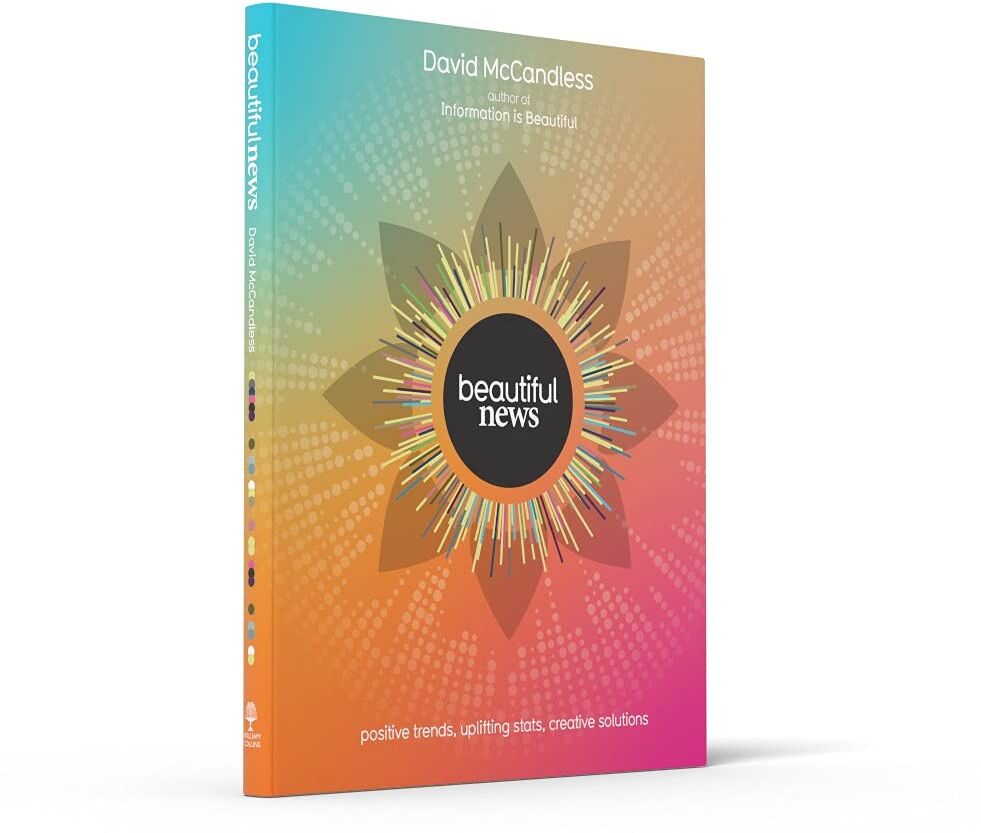
William Collins Beautiful News: Positive Trends, Uplifting Stats, Creative Solutions by David McCandlessIn this fascinating follow-up to the bestselling Information is Beautiful and Knowledge is Beautiful, the king of infographics David McCandless uses spectacular visuals to give us all a bit of good news. We are living in the Information Age, in which we are constantly bombarded with data – on television, in print and online. How can we relate to this mind-numbing overload? Enter David McCandless and his amazing infographics: simple, elegant ways to understand information too complex or abstract to grasp any way but visually. In his unique signature style, he creates dazzling displays that blend facts with their connections, contexts and relationships, making information meaningful, entertaining – and beautiful. In his highly anticipated third book, McCandless illustrates positive news from around the world, for an informative, engaging and uplifting collection of new infographic art.5,99 £*Shipping: 2,99 £Secure redirect to the provider
-
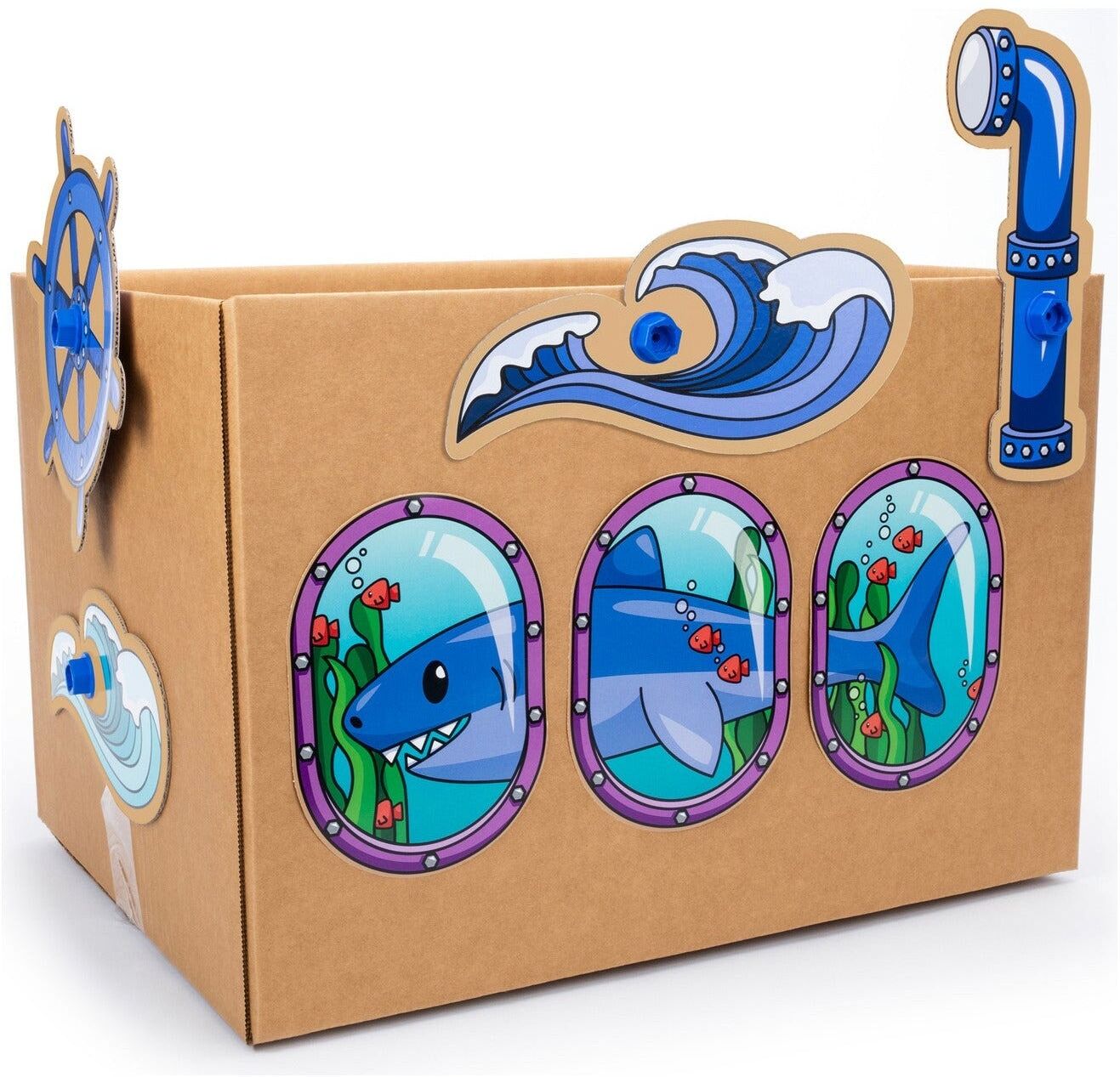
Educational Insights Boxineers Cardboard Vehicles Craft Kit - 84 Pieces for Kids - Educational InsightsTransform an ordinary cardboard box into a unique vehicle with the Boxineers Cardboard Vehicles Craft Kit. This kit includes 84 pieces, allowing children to create monster trucks, airplanes, rocket ships, recycling trucks, and many other imaginative creations. The reusable construction set features a child-friendly screwdriver and hole punch, making it easy for kids to attach the supplied parts without cutting the cardboard. Add wheels, wings, steering wheels, control panels, windows, flames, and other colorful accessories to customize each vehicle. The kit contains 30 bolts, six brackets, 40 reusable vehicle accessories, and six sticker sheets. Boxineers combines hands-on making with open-ended pretend play, encouraging children to experiment with how parts connect and solve simple construction problems.17,39 £*Shipping: 3,95 £Secure redirect to the provider
-
Board and Dice Nucleum Energy Research Institute Board Game - Strategic Economic Board Game with Energy Networks and Research DevelopmentBuild an industrial empire in an alternate twentieth century transformed by the Uranium Revolution. Compete to develop powerful energy networks, attract investment, and earn the support of influential patrons. Plan routes, expand research, and connect cities as you develop increasingly ambitious technologies. Every decision affects progress, from constructing facilities to pursuing contracts and partnerships. Resource management and long-term planning are essential to succeed.23,20 £*Shipping: 3,95 £Secure redirect to the provider
-
What are partitive articles in the French language?
Partitive articles in French are used to indicate an unspecified quantity of a noun. They are used when referring to a portion or some of a mass noun, such as food or liquid. The partitive articles in French are "du" (for masculine nouns), "de la" (for feminine nouns), and "de l'" (for nouns starting with a vowel or silent "h"). These articles are essential for expressing the concept of some or any in French. **
-
What are partitive articles and quantity increases in French?
Partitive articles in French are used to indicate an unspecified quantity of a noun. They are used with uncountable nouns or when referring to a portion of something. Quantity increases in French involve using words like "plus de" (more), "beaucoup de" (a lot of), or "trop de" (too much) to indicate an increase in the quantity of something. These expressions are used to specify a larger amount of a noun compared to using just the partitive article. **
-
What is the difference between partitive articles and quantity expressions?
Partitive articles are used to indicate an unspecified or unknown quantity of a mass noun, such as "some" or "any" in English. Quantity expressions, on the other hand, are used to specify a particular quantity or amount of something, such as "a few," "several," or "many." While partitive articles are more general and non-specific, quantity expressions provide a more specific indication of the amount or quantity of something. **
-
How does the use of partitive articles work correctly in French?
Partitive articles in French are used to indicate an unspecified quantity of a noun. They are formed by combining the preposition "de" with a definite article (le, la, les) to form du, de la, de l', or des. The choice of partitive article depends on the gender and number of the noun. For example, "du" is used with masculine singular nouns, "de la" with feminine singular nouns, and "des" with plural nouns. It is important to use partitive articles when referring to an unknown or unspecified quantity of something in French. **
Similar search terms for Partitive
-
United Charger & Smartwatch Data Cable Replacement Charger & Smartwatch Data Cable ReplacementKeep your Garmin 920XT charger ready whenever adventure calls. Designed for athletes, runners, and fitness enthusiasts, this replacement charger ensures your Forerunner 920XT stays powered and connected. Its durable smartwatch charging cable offers...39,97 $*Shipping: 0,00 $Secure redirect to the provider
-
SAGE Publications Case Study Research and Applications: Design and MethodsRecognized as one of the most cited methodology books in the social sciences, the Sixth Edition of Robert K. Yin′s bestselling text provides a complete portal to the world of case study research. With the integration of 11 applications in this edition, the book gives readers access to exemplary case studies drawn from a wide variety of academic and applied fields. Ultimately, Case Study Research and Applications will guide students in the successful use and application of the case study research method.59,99 £*Shipping: 0,00 £Secure redirect to the provider
-
EaseUS Data Recovery Wizard 18 ProEaseUS Partition Master 18.0 Professional is a powerful and versatile tool for partition management on Windows systems. Designed for home and professional users, this software offers a range of advanced features to optimise hard disk usage and improve system performance. Key Features Complete Partition Management: Create, resize, move, merge, delete and hide partitions with ease. EaseUS Partition Master allows you to manage partitions without data loss, ensuring a smooth and secure experience. Disk Cloning: Clone entire disks or individual partitions to easily transfer data from one drive to another. This function is especially useful when upgrading to new hard disks or SSDs. Partition Recovery: Recovers partitions lost or damaged as a result of accidental deletions, Windows upgrades or virus attacks. The recovery function is quick and easy, allowing data to be restored in just a few clicks. Performance Optimisation: Supports 4K alignment of SSD partitions to improve read and write performance, ensuring your system performs at its best. Advanced Conversion: Convert disks and partitions between MBR and GPT without formatting, making it easy to upgrade to Windows 11 and manage large disks. File System Check and Repair: Quickly checks the file system for errors and bad sectors, restoring disk functionality efficiently. Bootable Media Creation: Create WinPE bootable media to solve system boot problems or perform partition management tasks without booting Windows. Intuitive Interface: The user interface is designed to be simple and intuitive, making access to all features easy even for novice users. Why Choose EaseUS Partition Master 18.0 Professional? EaseUS Partition Master 18.0 Professional stands out for its combination of advanced functionality and ease of use. It is an ideal solution for anyone who wants to manage their disks effectively, whether they are home users or IT professionals. Competitively priced and with free updates for life, it is an excellent investment for optimising data management. Choose EaseUS Partition Master 18.0 Professional for stress-free partition management and to ensure that your system is always running at peak capacity. Don't let disk management become a hassle; trust EaseUS for a complete and reliable solution.55,90 £*Shipping: 0,00 £Secure redirect to the provider
-
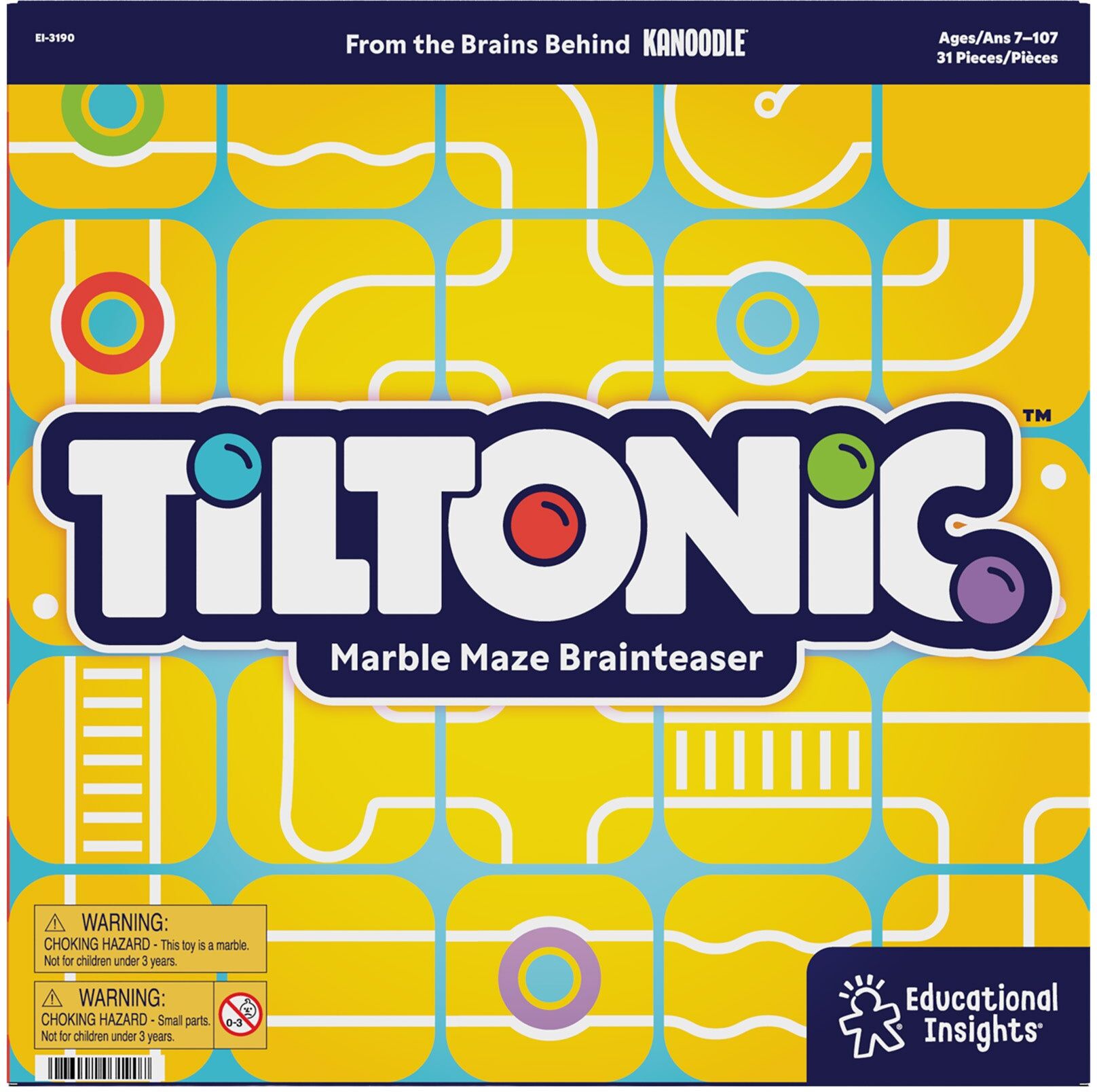
Educational Insights Tiltonic Marble Maze Brainteaser - 7+ - Adjustable Track PuzzleChallenge your problem-solving skills with the Educational Insights Tiltonic Marble Maze Brainteaser. This two-stage puzzle combines maze-building with hands-on marble play, creating a fun challenge for children aged 7 and up. Start by studying one of the included challenge puzzles and arranging the adjustable track pieces on the turquoise game board to create the correct route. Once the maze is ready, tilt the board carefully to guide the four colorful marbles through the track and into their matching destinations. Each challenge encourages players to think ahead, test ideas, and refine their solution. With 50 puzzle challenges, 25 adjustable track pieces, and four marbles, Tiltonic offers plenty of replay value. Children can also design their own marble mazes once they have mastered the included puzzles. The tactile format makes it an engaging alternative to screen-based entertainment while encouraging creativity, logic, critical thinking, and hand-eye coordination.13,89 £*Shipping: 3,95 £Secure redirect to the provider
-
What are the partitive articles used in French when indicating quantities?
In French, the partitive articles used to indicate quantities are "du" for masculine nouns, "de la" for feminine nouns, and "de l'" for nouns starting with a vowel or silent "h". These partitive articles are used to express an unspecified or indefinite quantity of something, similar to the English "some" or "any". For example, "du pain" means "some bread", "de la salade" means "some salad", and "de l'eau" means "some water". **
-
What types of partitive articles are used with quantities in French?
In French, partitive articles such as "du," "de la," and "des" are used with quantities when referring to an unspecified or unknown amount of something. These partitive articles are used to indicate a part or some of a whole. For example, "du pain" (some bread), "de la salade" (some salad), and "des pommes" (some apples) are all examples of partitive articles used with quantities in French. **
-
How is the partitive formed?
The partitive is formed in French by using the preposition "de" followed by the definite article "le," "la," or "les." This combination contracts to form "du," "de la," or "des" before a singular or plural noun, respectively. For example, "some bread" is "du pain" and "some apples" is "des pommes." The partitive is used to indicate an unspecified quantity or portion of a mass noun. **
-
Can someone explain the French grammar of articles and the partitive "de" to me?
In French grammar, articles are used to indicate the gender and number of nouns. There are definite articles (le, la, les) which are used to refer to specific nouns, and indefinite articles (un, une, des) which are used to refer to non-specific nouns. The partitive "de" is used to indicate an unspecified quantity of something, often used with mass nouns like food or drink. For example, "Je voudrais du pain" means "I would like some bread" where "du" is the partitive article. **
* All prices are inclusive of VAT and, if applicable, plus shipping costs. The offer information is based on the details provided by the respective shop and is updated through automated processes. Real-time updates do not occur, so deviations can occur in individual cases. ** Note: Parts of this content were created by AI.